Lime render · Scotland
Lime render in Greater Glasgow
We provide lime render across Greater Glasgow, including Glasgow, Paisley and Greenock, with a free survey and fixed written price. Lime work in Greater Glasgow is scheduled for frost-free months so the render cures properly.
- Free survey and fixed written price
- Guide price from £78 per m² + scaffold, inc VAT
- Planning and building control checked for Scotland
Free survey in Greater Glasgow
Tell us the postcode and what you need.
Included as standard
- Slower curing — needs frost-free, protected conditions
- Traditional hand-finished texture
- Often appropriate in conservation settings
- Vapour-open and flexible, suited to older solid walls
- Helps walls dry out where cement render trapped moisture
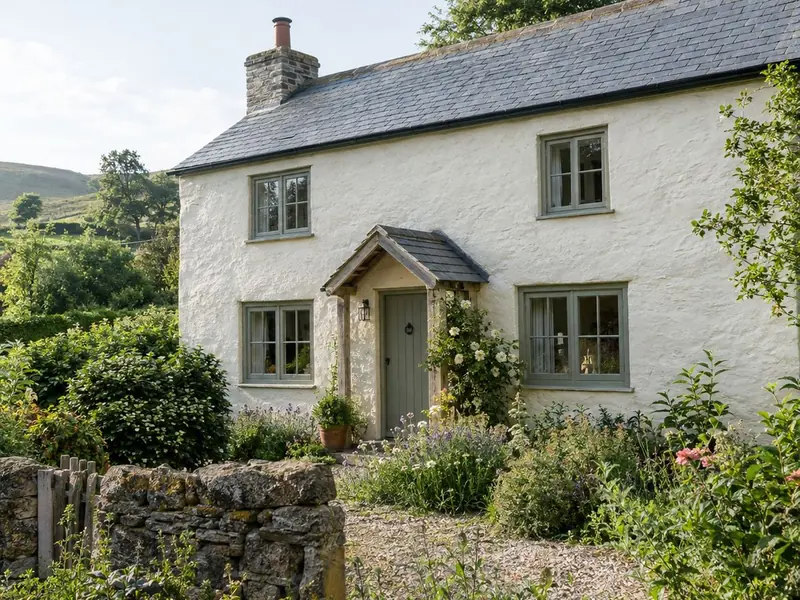
Greater Glasgow: walls, weather and approvals
West Central Scotland has sandstone tenements, interwar and post-war council housing including no-fines and other system-built types, and many harled (roughcast) houses.
Parts of Greater Glasgow fall in the higher wind-driven rain exposure bands, especially coastal and upland sites, so render specification, movement joints and detailing at cills, verges and the base of the wall matter more than usual.
Lime work in Greater Glasgow is scheduled for frost-free months so the render cures properly.
- Nation
- Scotland
- Region
- West Central Scotland
- Towns covered
- Glasgow, Paisley, Greenock, Bearsden, Clydebank, Newton Mearns, Bishopbriggs, Renfrew
- Guide price
- From £78 per m² + scaffold · inc VAT
Approvals in Scotland
In Scotland, householder permitted development rights are set by the Scottish GPDO and are narrower for external wall changes; insulating flats or tenements, changing the appearance of a house noticeably, or working in a conservation area usually needs planning permission. Listed buildings need listed building consent. Ask your council's planning team before committing.
Work that alters an external wall's construction is covered by the building standards system; many over-cladding projects need a building warrant from the council's building standards team, and Section 6 (Energy) of the Technical Handbooks sets insulation benchmarks.
Why use lime instead of cement?
Cement render is hard and relatively impermeable. On older walls built with lime mortar, it can crack, let rain in at the cracks and then stop the wall drying, leading to damp patches inside and spalling stone or brick. Lime is softer, more flexible and vapour-open, so moisture can escape.
Lime render prices in Greater Glasgow
| Item | Guide price | Notes |
|---|---|---|
| Lime render, three-coat | £78–£132 per m²inc VAT | Excluding scaffold |
| Removing cement render first | £22–£48 per m²inc VAT | Where needed |
| Wood fibre + lime EWI | £150–£210 per m²0% VAT | See wood fibre EWI |
Confirmed by a fixed written quote after survey. Prices include VAT at 20%. 0% VAT: installing insulation in a home is zero-rated until 31 March 2027, so these figures are the total; 5% applies from 1 April 2027.
What happens next
Enquiry
Send your postcode and a few details.
Measured survey
Walls, damp, eaves, cills and services recorded.
Written price
A fixed price with the specification attached.
Work and handover
Installed, inspected and documents handed over.
Lime render in Greater Glasgow: questions
Should I remove cement render from my stone house?
If it's cracked, hollow or trapping damp, often yes. If it's sound and the wall is dry, it may be left. The survey looks at both.
Can lime render be applied in winter?
Only with protection and in frost-free conditions. Spring to early autumn is the usual season.
Does lime render need painting?
Traditionally it's limewashed, which is breathable. Modern masonry paints can block vapour, so we'd avoid them.
Do you cover all of Greater Glasgow?
Yes. We survey and quote lime render across Greater Glasgow, including Glasgow, Paisley, Greenock, Bearsden, Clydebank.
Do I need planning permission in Scotland?
In Scotland, householder permitted development rights are set by the Scottish GPDO and are narrower for external wall changes; insulating flats or tenements, changing the appearance of a house noticeably, or working in a conservation area usually needs planning permission. We check your address before quoting.