Render finishes
Lime render
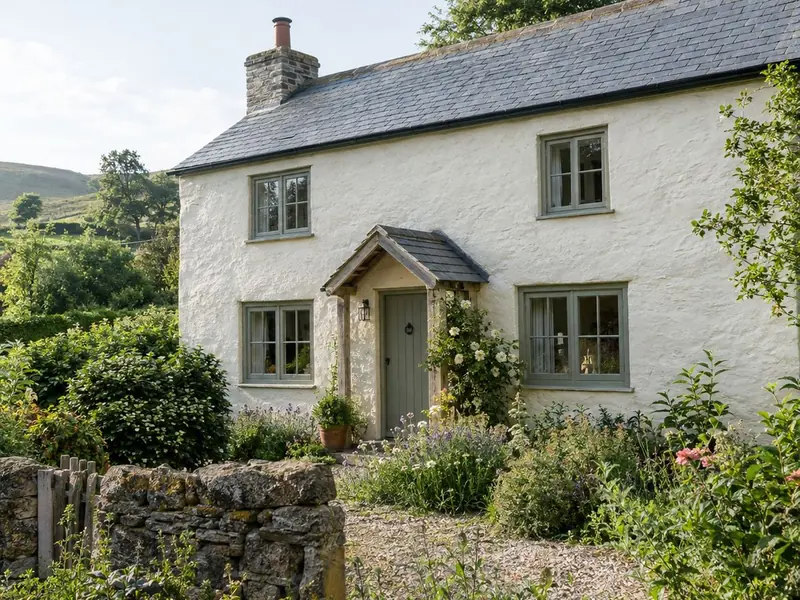
Lime render is a breathable render made with natural hydraulic lime or lime putty, applied by hand in two or three coats. It lets moisture move in and out of older solid walls, which cement renders can trap.
- Vapour-open and flexible, suited to older solid walls
- Helps walls dry out where cement render trapped moisture
- Traditional hand-finished texture
- Works with wood fibre insulation as a breathable EWI system
- Slower curing — needs frost-free, protected conditions
- Often appropriate in conservation settings
Free survey for lime render
Tell us about the property. We reply on working days.
Why use lime instead of cement?
Cement render is hard and relatively impermeable. On older walls built with lime mortar, it can crack, let rain in at the cracks and then stop the wall drying, leading to damp patches inside and spalling stone or brick. Lime is softer, more flexible and vapour-open, so moisture can escape.
Typical build-up
- Binder
- Natural hydraulic lime (NHL) or lime putty
- Coats
- Usually 2–3
- Thickness
- ≈15–25mm overall
- Curing
- Slow; protect from frost and rain
- Finish
- Float, sponge or roughcast
How is lime render applied?
Old cement render is removed where it's causing problems, the wall is dampened, and lime is applied in successive coats — usually a scratch coat, a float coat and a finish coat — with curing time between. Freshly applied lime must be protected from frost, rain and fast drying.
Can lime render be insulated?
Yes, using wood fibre boards or insulating lime plasters. These keep the wall breathable while reducing heat loss.
Lime render prices
| Item | Guide price | Notes |
|---|---|---|
| Lime render, three-coat | £78–£132 per m²inc VAT | Excluding scaffold |
| Removing cement render first | £22–£48 per m²inc VAT | Where needed |
| Wood fibre + lime EWI | £150–£210 per m²0% VAT | See wood fibre EWI |
Guide prices are confirmed by a fixed written quote after a free survey. Prices include VAT at 20%. 0% VAT: installing insulation in a home is zero-rated until 31 March 2027, so these figures are the total; 5% applies from 1 April 2027.
How it works
Tell us about the property
Use the quote tool or form, or call free on 0800 088 6248.
Free survey
We measure the walls, check condition and confirm planning and building control.
Fixed written quote
The system, details, access, exclusions and VAT, in writing. Anything hidden is priced and agreed before extra work.
Installation and handover
Work planned around the weather, then inspected and documented.
Lime render: questions
Can lime render be applied in winter?
Only with protection and in frost-free conditions. Spring to early autumn is the usual season.
Does lime render need painting?
Traditionally it's limewashed, which is breathable. Modern masonry paints can block vapour, so we'd avoid them.
Should I remove cement render from my stone house?
If it's cracked, hollow or trapping damp, often yes. If it's sound and the wall is dry, it may be left. The survey looks at both.
Is lime render more expensive?
Usually, because it's applied in coats by hand and needs more curing time.
Where we work
Lime render by area
Each area page covers local planning, building control and the weather your walls face.
England
- Bedfordshire
- Berkshire
- Bristol
- Buckinghamshire
- Cambridgeshire
- Cheshire
- Cornwall
- County Durham
- Cumbria
- Derbyshire
- Devon
- Dorset
- East Riding of Yorkshire
- East Sussex
- Essex
- Gloucestershire
- Greater London
- Greater Manchester
- Hampshire
- Herefordshire
- Hertfordshire
- Isle of Wight
- Kent
- Lancashire
- Leicestershire
- Lincolnshire
- Merseyside
- Norfolk
- North Yorkshire
- Northamptonshire
- Northumberland
- Nottinghamshire
- Oxfordshire
- Rutland
- Shropshire
- Somerset
- South Yorkshire
- Staffordshire
- Suffolk
- Surrey
- Tyne and Wear
- Warwickshire
- West Midlands
- West Sussex
- West Yorkshire
- Wiltshire
- Worcestershire
Wales
Scotland
- Aberdeen and Aberdeenshire
- Argyll and Bute
- Ayrshire
- Dumfries and Galloway
- Dundee and Angus
- Edinburgh and the Lothians
- Fife
- Forth Valley
- Greater Glasgow
- Highland
- Lanarkshire
- Moray
- Orkney, Shetland and the Western Isles
- Perth and Kinross
- Scottish Borders
Northern Ireland
Related
Often considered alongside
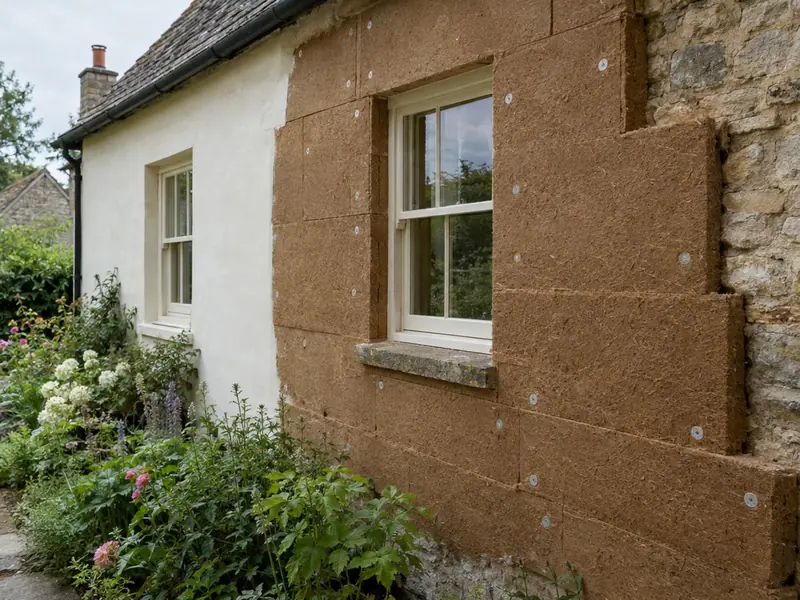
Wood fibre insulation for older homes
Breathable boards with lime render for stone and period walls.
Learn more →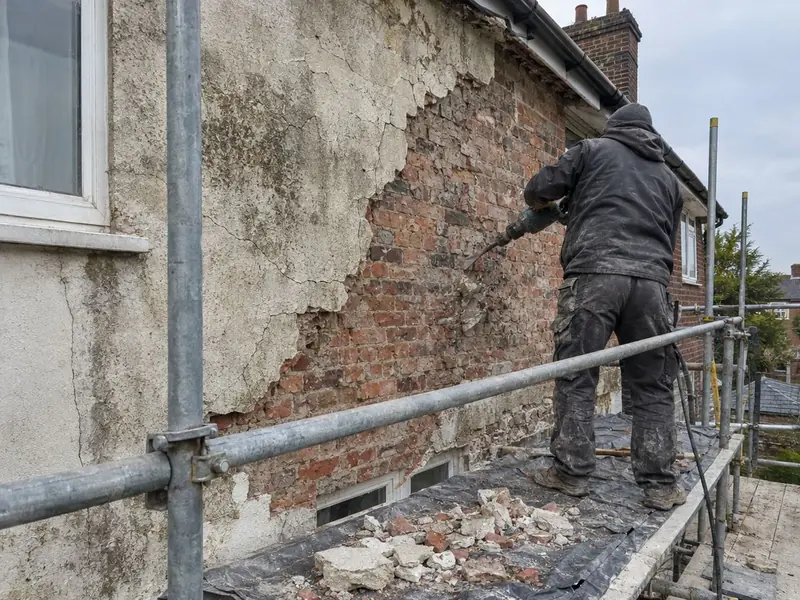
Re-rendering
Strip failed render, repair the wall and render again — or insulate.
Learn more →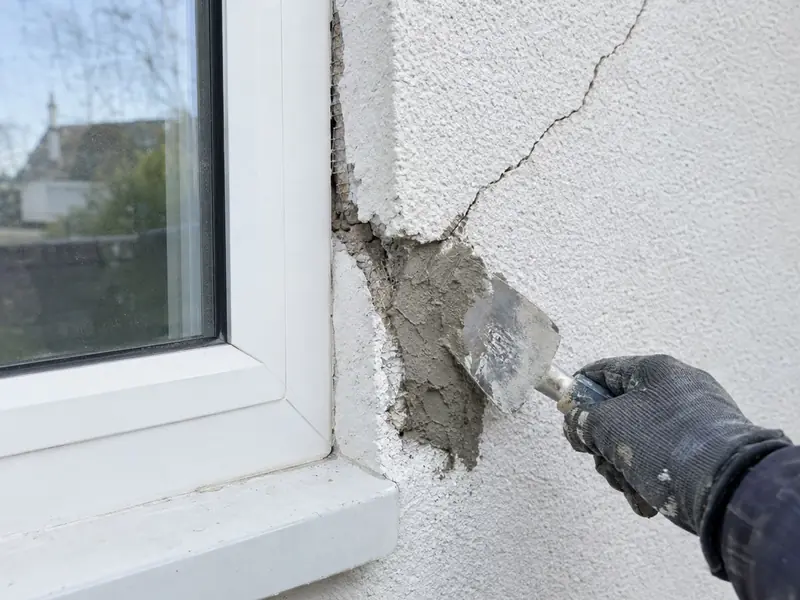
Render repairs
Cracks, hollow patches and beads repaired after finding the cause.
Learn more →
Solid wall insulation
External or internal insulation for homes with no cavity to fill.
Learn more →