External wall insulation
Insulation for non-traditional houses
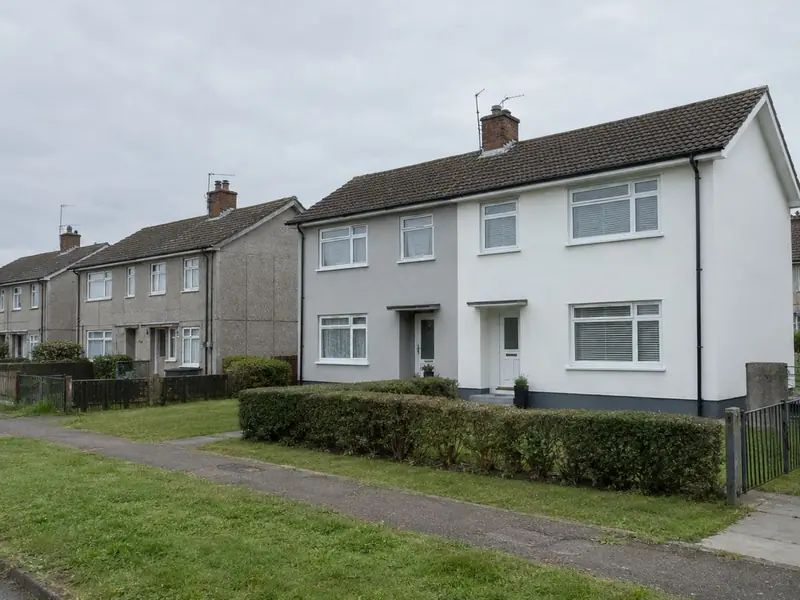
Non-traditional houses are homes built from concrete, steel or timber systems instead of brick and block — such as Wimpey no-fines, Airey, Cornish Unit, Reema and BISF steel-framed houses. External wall insulation is the usual way to insulate them, because most have no cavity that can be filled.
- Most system-built homes have thin, cold walls and no fillable cavity
- EWI improves comfort and can renew a tired concrete exterior
- The survey identifies the construction type before anything is specified
- Fixing design depends on the panel or frame behind the wall
- Steel-framed BISF houses need care around the upper-storey cladding
- EWI is not a structural repair for PRC houses designated defective
Free survey for non-traditional houses
Tell us about the property. We reply on working days.
How do I know if my house is non-traditional?
Clues include concrete panels or posts visible at corners, a smooth concrete or rendered finish on houses of a 1940s–1960s estate, steel sheeting on the upper storey, or a mortgage valuation that mentioned the construction type. Common types include Wimpey no-fines (poured concrete), Airey and Cornish Unit (precast reinforced concrete), Reema, Orlit and BISF (steel frame). We identify the type during the survey.
Typical build-up
- Common types
- Wimpey no-fines, Airey, Cornish Unit, Reema, Orlit, BISF, Easiform
- Typical starting U-value
- Often 1.5–2.0 W/m²K or worse
- Typical board
- EPS or mineral wool, 90–120mm
- Key risk
- Structural condition and fixing design
- Approvals
- Building control; planning where appearance changes
Does EWI fix mortgage problems with PRC houses?
Not on its own. Some precast reinforced concrete (PRC) house types were designated defective, and many lenders want a certified structural repair before they will lend. Insulation and render over the outside is not that repair. Other types, such as Wimpey no-fines, are generally treated differently. If mortgageability matters, speak to your lender or a surveyor before booking any work.
What does the work involve?
After checking the wall condition, any spalling concrete or corroded steel is reported before boards go on. Fixings are chosen for the substrate — concrete, steel-framed panels or mixed constructions — and the system is detailed around eaves, cills and the junction with neighbouring properties, which may not be insulated.
Non-traditional and concrete house insulation prices
| Item | Guide price | Notes |
|---|---|---|
| EWI on concrete or steel-framed walls | £120–£180 per m²0% VAT | Includes extra preparation |
| Semi-detached, full house | £11,400–£21,2000% VAT | 80–100 m² of wall, including scaffold |
| Concrete repairs found at survey | Priced separately | Only where needed |
Guide prices are confirmed by a fixed written quote after a free survey. 0% VAT: installing insulation in a home is zero-rated until 31 March 2027, so these figures are the total; 5% applies from 1 April 2027.
How it works
Tell us about the property
Use the quote tool or form, or call free on 0800 088 6248.
Free survey
We measure the walls, check condition and confirm planning and building control.
Fixed written quote
The system, details, access, exclusions and VAT, in writing. Anything hidden is priced and agreed before extra work.
Installation and handover
Work planned around the weather, then inspected and documented.
Non-traditional and concrete house insulation: questions
Can you insulate a Wimpey no-fines house?
Yes. No-fines houses have solid poured-concrete walls with no cavity, so EWI is the usual route. The survey checks the concrete condition first.
Can you put EWI on a BISF house?
Yes, with care. The steel frame and upper-storey cladding need a system and fixing method designed for that construction, and the condition of the frame should be understood first.
Will EWI make my house mortgageable?
It can make a house more attractive and better insulated, but it does not replace a certified structural repair where a lender requires one. Ask your lender before relying on it.
What if my neighbour isn't insulating?
We finish the system neatly at the boundary with a closing detail so the neighbouring house isn't affected and can be joined later.
Where we work
Non-traditional and concrete house insulation by area
Each area page covers local planning, building control and the weather your walls face.
England
- Bedfordshire
- Berkshire
- Bristol
- Buckinghamshire
- Cambridgeshire
- Cheshire
- Cornwall
- County Durham
- Cumbria
- Derbyshire
- Devon
- Dorset
- East Riding of Yorkshire
- East Sussex
- Essex
- Gloucestershire
- Greater London
- Greater Manchester
- Hampshire
- Herefordshire
- Hertfordshire
- Isle of Wight
- Kent
- Lancashire
- Leicestershire
- Lincolnshire
- Merseyside
- Norfolk
- North Yorkshire
- Northamptonshire
- Northumberland
- Nottinghamshire
- Oxfordshire
- Rutland
- Shropshire
- Somerset
- South Yorkshire
- Staffordshire
- Suffolk
- Surrey
- Tyne and Wear
- Warwickshire
- West Midlands
- West Sussex
- West Yorkshire
- Wiltshire
- Worcestershire
Wales
Scotland
- Aberdeen and Aberdeenshire
- Argyll and Bute
- Ayrshire
- Dumfries and Galloway
- Dundee and Angus
- Edinburgh and the Lothians
- Fife
- Forth Valley
- Greater Glasgow
- Highland
- Lanarkshire
- Moray
- Orkney, Shetland and the Western Isles
- Perth and Kinross
- Scottish Borders
Northern Ireland
Related
Often considered alongside
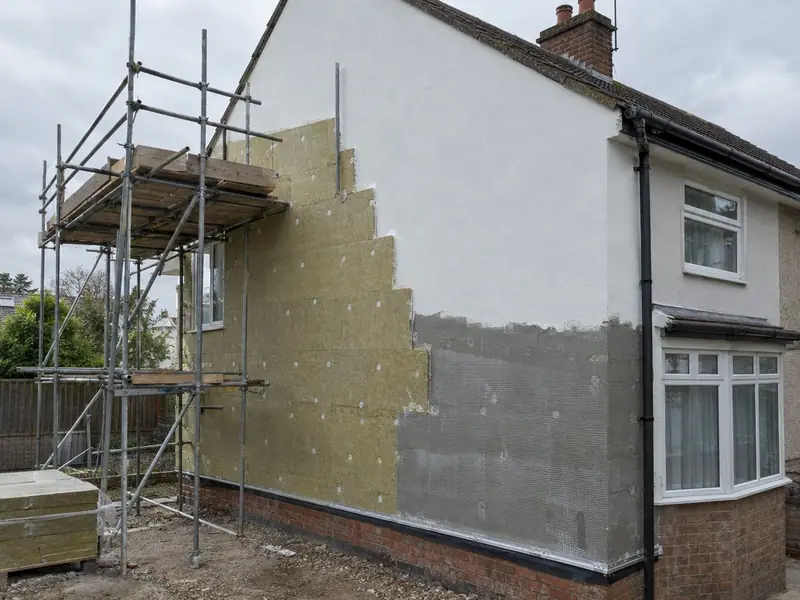
External wall insulation
Insulation boards fixed outside and finished in render — no lost room space.
Learn more →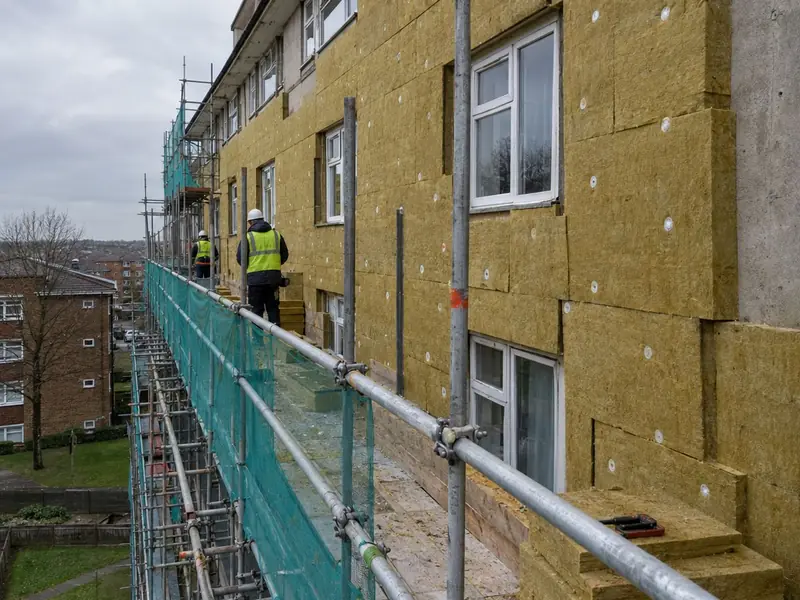
Mineral wool external wall insulation
Non-combustible, breathable slabs — the choice for flats and taller walls.
Learn more →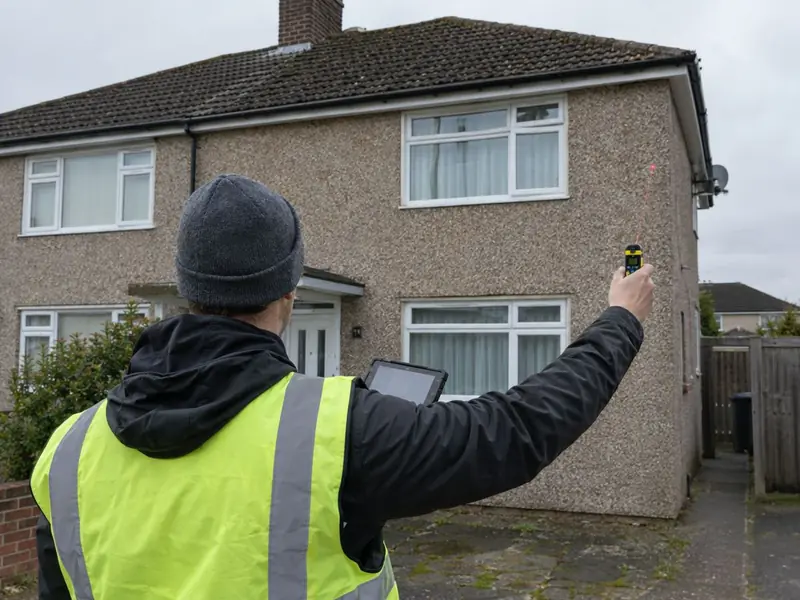
EWI and render survey
Free measured survey and fixed written quote for installation work.
Learn more →
EWI for flats and blocks
Whole-block insulation for landlords, RMCs and managing agents.
Learn more →