Solid and internal wall insulation
Solid wall insulation
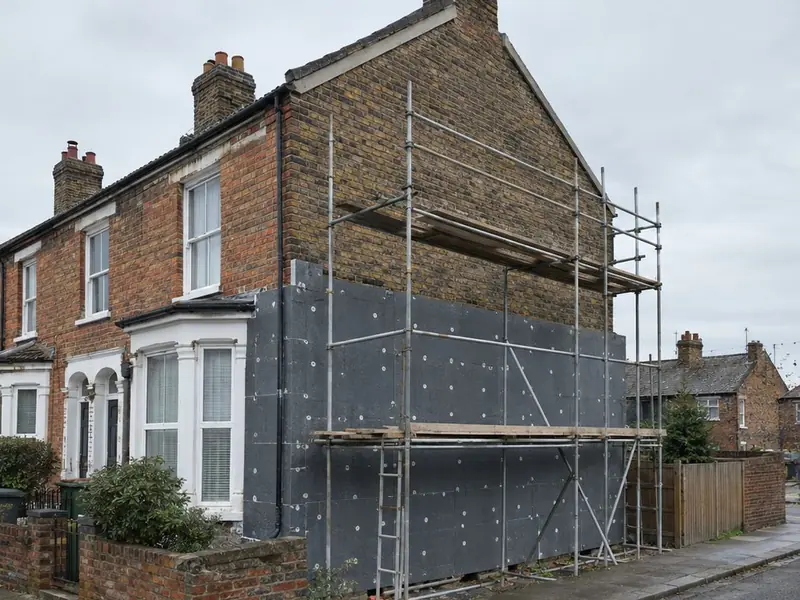
Solid wall insulation is any insulation added to a wall that has no cavity — most UK homes built before about 1920, and many stone and concrete houses. It is done either externally (EWI, finished in render) or internally (insulated boards or stud walls inside the rooms).
- Solid walls can lose heat roughly twice as fast as an insulated cavity wall
- External insulation keeps room sizes and treats cold bridges well
- Internal insulation suits single rooms or where the outside can't change
- Both can be done in stages, elevation by elevation or room by room
- Breathable options for stone and lime-mortared walls
- In England and Wales, Building Regulations apply when more than half of a wall is treated
Free survey for solid wall insulation
Tell us about the property. We reply on working days.
How can I tell if my walls are solid?
Measure the wall thickness at a window or door: about 225mm (9 inches) of brick usually means solid, while 260mm or more often means a cavity. On exposed brick, a pattern with bricks laid end-on (headers) every few courses points to solid construction. Stone walls are usually solid regardless of thickness. Age is a strong clue too — most homes built before the 1920s are solid-walled.
Typical build-up
- Typical uninsulated U-value
- ≈2.0–2.1 W/m²K (225mm brick)
- Typical target
- ≈0.30 W/m²K where practical
- Routes
- External (EWI) or internal (IWI)
- Breathable options
- Wood fibre, mineral wool, lime
- Approvals
- Building Regulations; planning for EWI where appearance changes
External or internal — which is better?
External insulation keeps the wall warm, reduces cold bridging at floors and party walls, renews the outside, and doesn't shrink rooms — but it changes the look and needs scaffolding. Internal insulation keeps the façade unchanged and can be done room by room, but loses 50–100mm of floor space per wall and needs careful detailing to avoid condensation at joists and corners.
What does solid wall insulation cost?
External systems run at roughly £105–£210 per m² of wall depending on the board and finish. Internal insulation is roughly £75–£130 per m², plus the cost of moving radiators, sockets and kitchen units.
Solid wall insulation prices
| Item | Guide price | Notes |
|---|---|---|
| External (EWI) | £105–£210 per m²0% VAT | By board and finish |
| Internal (IWI) | £75–£130 per m²0% VAT | Plus making good |
| Survey and written recommendation | Free with a quote |
Guide prices are confirmed by a fixed written quote after a free survey. 0% VAT: installing insulation in a home is zero-rated until 31 March 2027, so these figures are the total; 5% applies from 1 April 2027.
How it works
Tell us about the property
Use the quote tool or form, or call free on 0800 088 6248.
Free survey
We measure the walls, check condition and confirm planning and building control.
Fixed written quote
The system, details, access, exclusions and VAT, in writing. Anything hidden is priced and agreed before extra work.
Installation and handover
Work planned around the weather, then inspected and documented.
Solid wall insulation: questions
Is solid wall insulation worth it?
For many solid-walled homes it's one of the biggest single improvements to comfort, because the walls are often the largest heat-loss area. Savings depend on the home and heating, so we don't promise a figure.
Can I get a grant for solid wall insulation?
Some schemes cover it for eligible households — for example ECO4 until 31 December 2026, Home Energy Scotland's grant and loan, Wales' Warm Homes Nest and NI's Affordable Warmth Scheme. Each has its own eligibility and installer rules; see our grants guide.
Does solid wall insulation cause condensation?
It can if detailed poorly, particularly internally. A condensation risk check for the proposed build-up and careful detailing at joists, reveals and corners avoid it.
Can I do one wall at a time?
Yes. Many owners start with the coldest or most exposed elevation, often a gable end.
Where we work
Solid wall insulation by area
Each area page covers local planning, building control and the weather your walls face.
England
- Bedfordshire
- Berkshire
- Bristol
- Buckinghamshire
- Cambridgeshire
- Cheshire
- Cornwall
- County Durham
- Cumbria
- Derbyshire
- Devon
- Dorset
- East Riding of Yorkshire
- East Sussex
- Essex
- Gloucestershire
- Greater London
- Greater Manchester
- Hampshire
- Herefordshire
- Hertfordshire
- Isle of Wight
- Kent
- Lancashire
- Leicestershire
- Lincolnshire
- Merseyside
- Norfolk
- North Yorkshire
- Northamptonshire
- Northumberland
- Nottinghamshire
- Oxfordshire
- Rutland
- Shropshire
- Somerset
- South Yorkshire
- Staffordshire
- Suffolk
- Surrey
- Tyne and Wear
- Warwickshire
- West Midlands
- West Sussex
- West Yorkshire
- Wiltshire
- Worcestershire
Wales
Scotland
- Aberdeen and Aberdeenshire
- Argyll and Bute
- Ayrshire
- Dumfries and Galloway
- Dundee and Angus
- Edinburgh and the Lothians
- Fife
- Forth Valley
- Greater Glasgow
- Highland
- Lanarkshire
- Moray
- Orkney, Shetland and the Western Isles
- Perth and Kinross
- Scottish Borders
Northern Ireland
Related
Often considered alongside
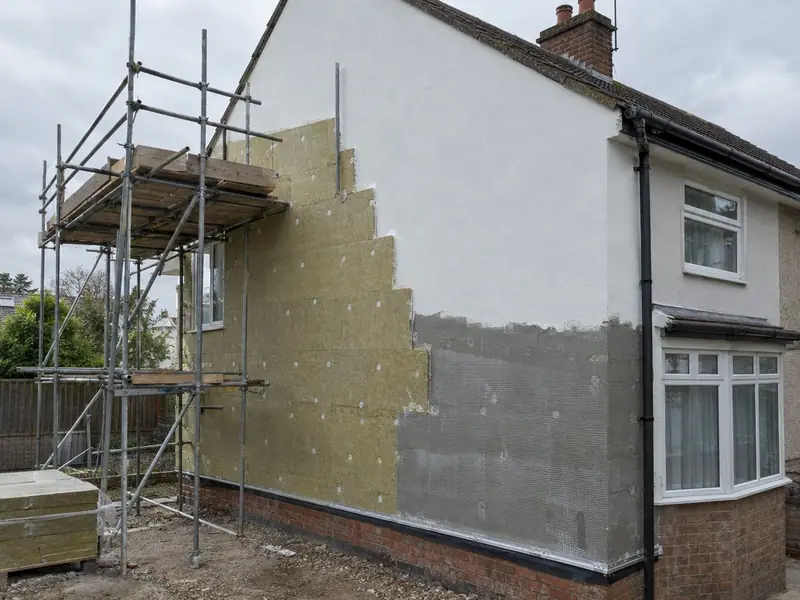
External wall insulation
Insulation boards fixed outside and finished in render — no lost room space.
Learn more →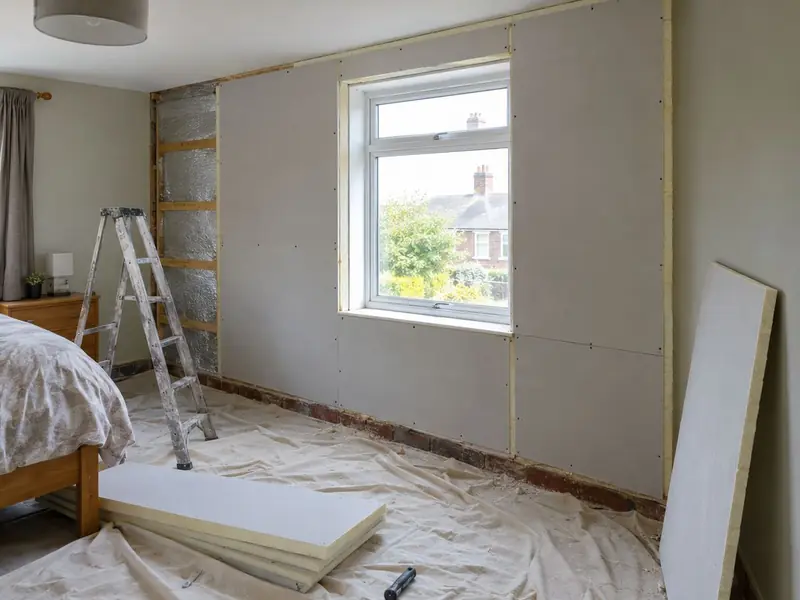
Internal wall insulation
Insulate from the inside, room by room, when the outside can't change.
Learn more →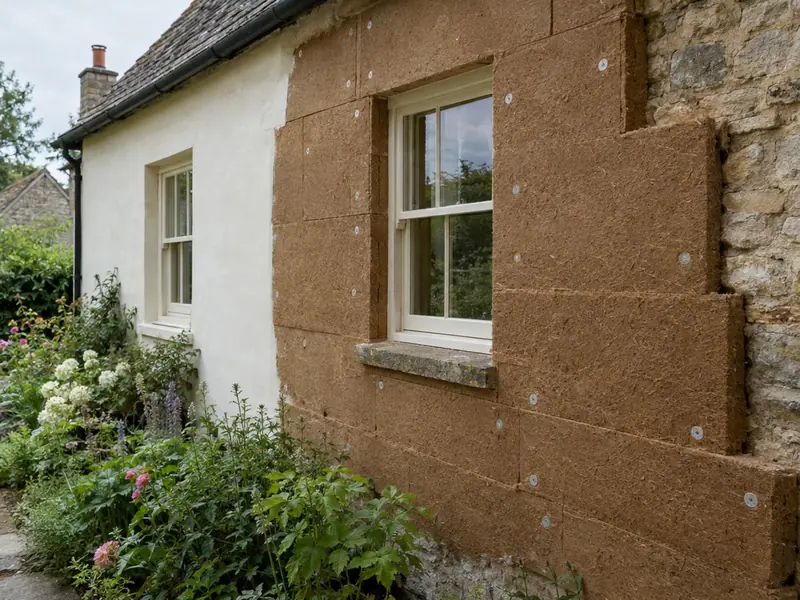
Wood fibre insulation for older homes
Breathable boards with lime render for stone and period walls.
Learn more →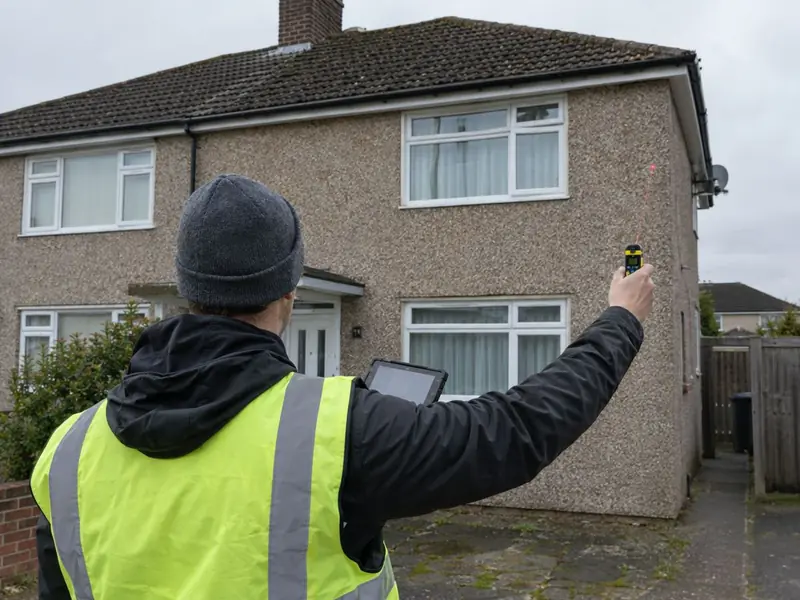
EWI and render survey
Free measured survey and fixed written quote for installation work.
Learn more →