External wall insulation
Mineral wool external wall insulation
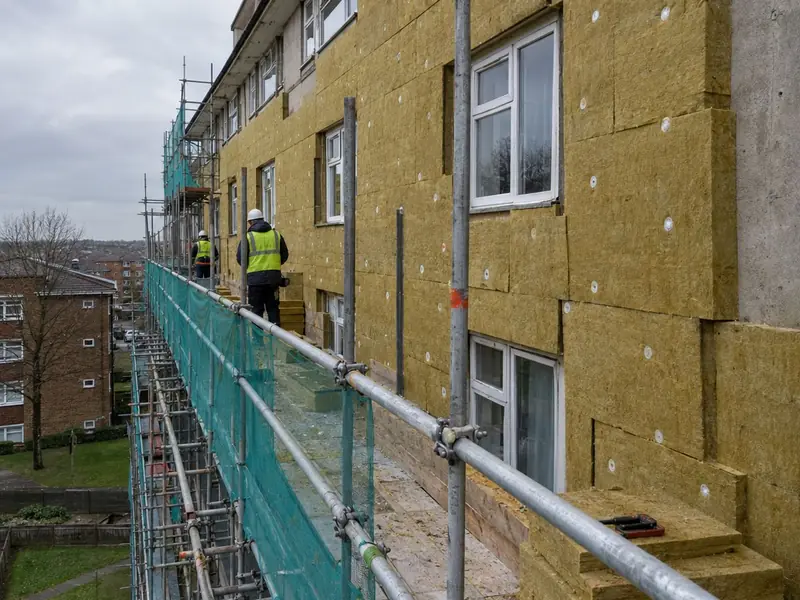
Mineral wool external wall insulation uses dense stone-wool slabs or lamellas, which are non-combustible, vapour-open and good at reducing outside noise. It is the usual choice on flats, taller buildings and walls that need to breathe.
- Non-combustible board (typically Euroclass A1 or A2-s1,d0 as part of the system)
- Vapour-open, so moisture in solid walls can dry outwards
- Better sound reduction than foam boards
- Used on blocks of flats and buildings with storeys above 11m
- Heavier than EPS, so more fixings and careful handling
- Finished in mineral or silicone render, or brick slip
Free survey for mineral wool EWI
Tell us about the property. We reply on working days.
Why choose mineral wool over EPS?
Two reasons come up most: fire and moisture. Mineral wool doesn't burn, which is why guidance for taller residential buildings points to non-combustible external wall materials. It is also vapour-open, so a solid wall that holds some moisture can keep drying outwards through the insulation and render.
The trade-offs are weight and cost. Slabs are denser, need more fixings and take longer to install, so the price per m² is higher than EPS.
Typical build-up
- Board
- Stone-wool slab or lamella
- Conductivity (λ)
- ≈0.035–0.041 W/mK
- Fire reaction
- Non-combustible board; system class confirmed per spec
- Vapour
- Open — suits solid masonry
- Typical thickness
- 80–160mm
Is mineral wool required on my building?
For most two-storey houses it's a choice rather than a requirement. In England, regulation 7(2) bans combustible materials in the external walls of 'relevant buildings' 18 metres and over, and the Approved Document B guidance also covers residential buildings with a storey at 11 metres or more. Wales has its own amended rules, and Scotland restricts combustible cladding on buildings with a storey more than 11 metres above ground. We specify mineral wool wherever these apply and confirm the system's fire classification in writing.
What about noise?
Dense mineral wool adds mass and absorbs sound, so homes beside main roads or railways often notice a quieter interior, particularly where windows are also upgraded. The improvement depends on the whole wall and windows, so we don't quote decibel figures without testing.
Mineral wool external wall insulation prices
| Item | Guide price | Notes |
|---|---|---|
| Mineral wool + mineral or silicone render | £125–£170 per m²0% VAT | Excluding scaffold |
| Mineral wool + brick slip | £195–£260 per m²0% VAT | Heavier slip systems need extra fixings |
| Three-bed semi, full house | £11,800–£20,2000% VAT | 80–100 m² of wall, including scaffold |
Guide prices are confirmed by a fixed written quote after a free survey. 0% VAT: installing insulation in a home is zero-rated until 31 March 2027, so these figures are the total; 5% applies from 1 April 2027.
How it works
Tell us about the property
Use the quote tool or form, or call free on 0800 088 6248.
Free survey
We measure the walls, check condition and confirm planning and building control.
Fixed written quote
The system, details, access, exclusions and VAT, in writing. Anything hidden is priced and agreed before extra work.
Installation and handover
Work planned around the weather, then inspected and documented.
Mineral wool external wall insulation: questions
Is mineral wool better than EPS?
Not always better — different. Mineral wool wins on fire performance, breathability and acoustics; EPS wins on cost, weight and thinner boards for the same U-value. The wall, the building height and your priorities decide it.
Does mineral wool get wet?
It is water-repellent and protected by the render system. Like any insulation it must not be left exposed to rain during installation, so boards are covered and work stops in wet weather.
Is mineral wool needed for a bungalow?
Rarely for fire reasons. It may still be chosen on a damp-prone solid wall where a vapour-open build-up is wanted.
Can mineral wool EWI have a brick finish?
Yes. Brick slips can be bonded over mineral wool systems designed for them, with additional fixings for the extra weight.
Where we work
Mineral wool external wall insulation by area
Each area page covers local planning, building control and the weather your walls face.
England
- Bedfordshire
- Berkshire
- Bristol
- Buckinghamshire
- Cambridgeshire
- Cheshire
- Cornwall
- County Durham
- Cumbria
- Derbyshire
- Devon
- Dorset
- East Riding of Yorkshire
- East Sussex
- Essex
- Gloucestershire
- Greater London
- Greater Manchester
- Hampshire
- Herefordshire
- Hertfordshire
- Isle of Wight
- Kent
- Lancashire
- Leicestershire
- Lincolnshire
- Merseyside
- Norfolk
- North Yorkshire
- Northamptonshire
- Northumberland
- Nottinghamshire
- Oxfordshire
- Rutland
- Shropshire
- Somerset
- South Yorkshire
- Staffordshire
- Suffolk
- Surrey
- Tyne and Wear
- Warwickshire
- West Midlands
- West Sussex
- West Yorkshire
- Wiltshire
- Worcestershire
Wales
Scotland
- Aberdeen and Aberdeenshire
- Argyll and Bute
- Ayrshire
- Dumfries and Galloway
- Dundee and Angus
- Edinburgh and the Lothians
- Fife
- Forth Valley
- Greater Glasgow
- Highland
- Lanarkshire
- Moray
- Orkney, Shetland and the Western Isles
- Perth and Kinross
- Scottish Borders
Northern Ireland
Related
Often considered alongside
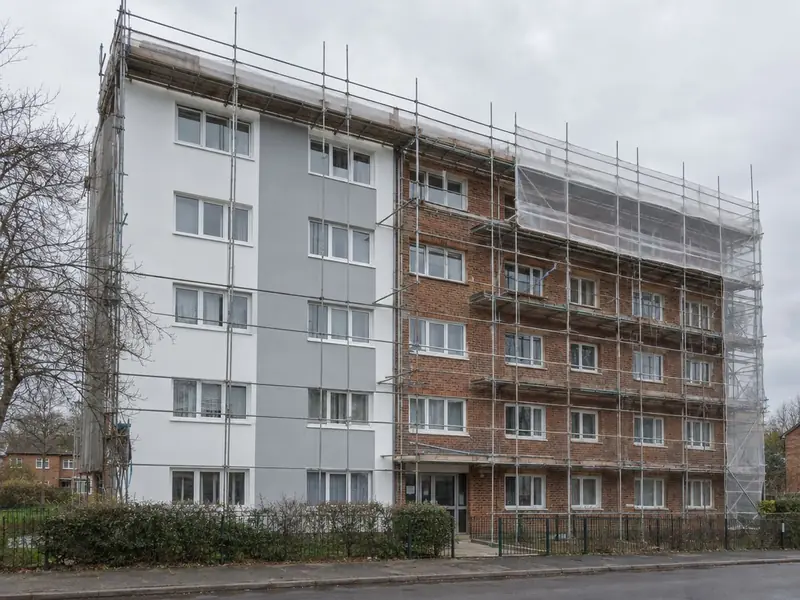
EWI for flats and blocks
Whole-block insulation for landlords, RMCs and managing agents.
Learn more →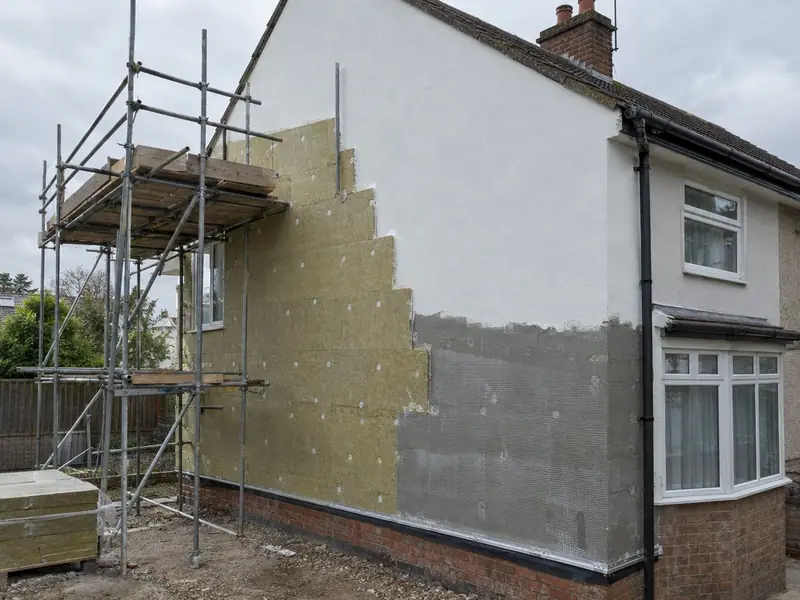
External wall insulation
Insulation boards fixed outside and finished in render — no lost room space.
Learn more →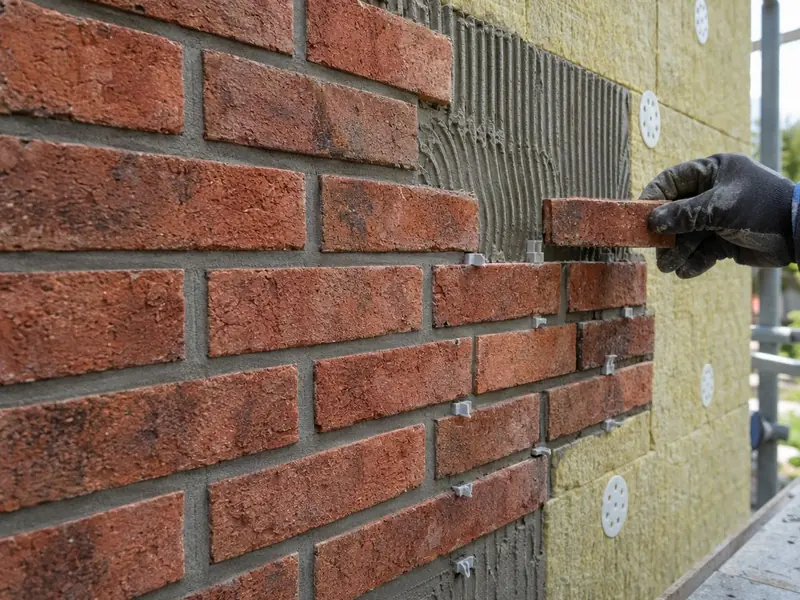
Brick slip finish over insulation
Insulate the wall and keep a brick appearance.
Learn more →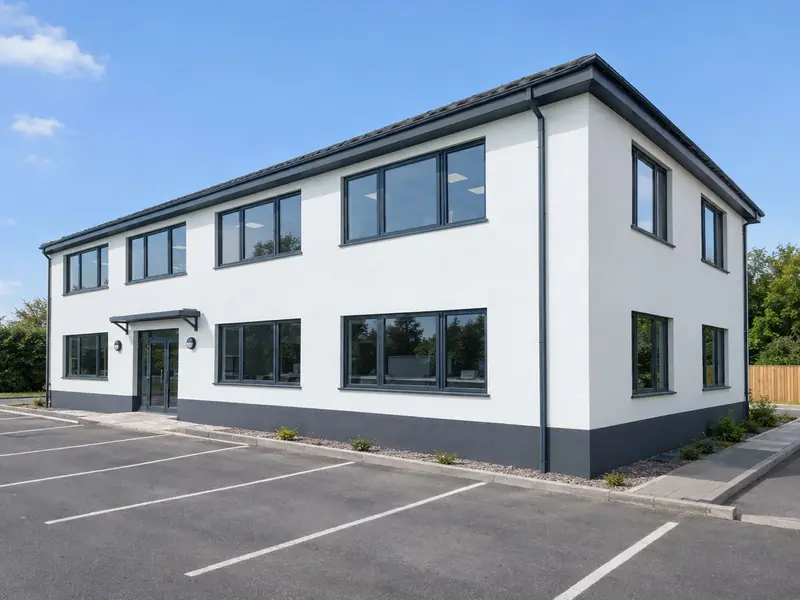
Commercial and public building EWI
Insulated render for offices, schools and community buildings.
Learn more →