Acrylic render · Scotland
Acrylic render in Argyll and Bute
Acrylic render across Argyll and Bute: measured survey, clear specification and a fixed written price before any work starts. For Argyll and Bute homes with older solid walls, we'll usually steer you to silicone or mineral finishes instead.
- Free survey and fixed written price
- Guide price from £60 per m² + scaffold, inc VAT
- Planning and building control checked for Scotland
Free survey in Argyll and Bute
Tell us the postcode and what you need.
What you get
- Flexible finish that resists hairline cracking
- Less vapour-open than silicone or mineral finishes
- Thin-coat, typically 1–2mm grain
- Good for extensions, boards and smaller areas
- Very wide colour range, including stronger shades
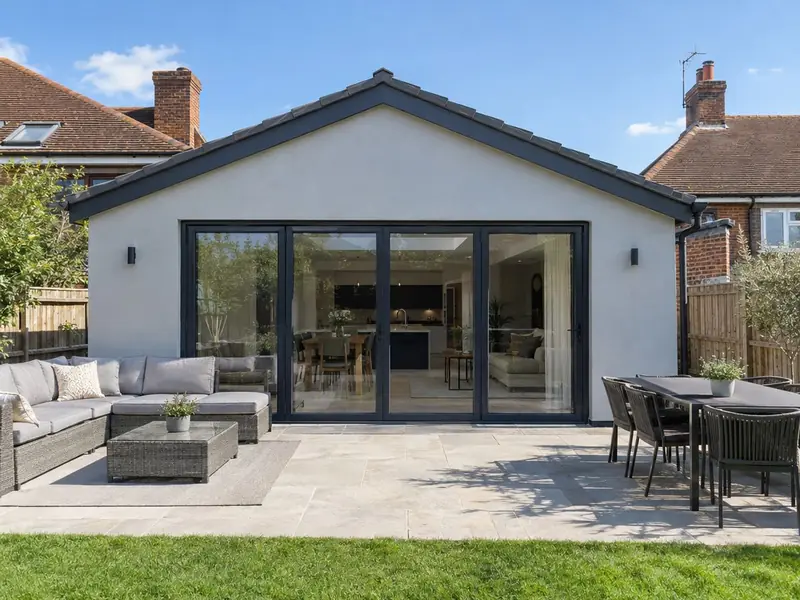
Homes and walls in Argyll and Bute
The Highlands and Islands have many exposed stone and harled homes, timber-framed houses and scattered rural properties.
Parts of Argyll and Bute fall in the higher wind-driven rain exposure bands, especially coastal and upland sites, so render specification, movement joints and detailing at cills, verges and the base of the wall matter more than usual.
For Argyll and Bute homes with older solid walls, we'll usually steer you to silicone or mineral finishes instead.
- Nation
- Scotland
- Region
- Highlands and Islands
- Towns covered
- Helensburgh, Dunoon, Oban, Campbeltown
- Guide price
- From £60 per m² + scaffold · inc VAT
Scotland: planning and regulations
In Scotland, householder permitted development rights are set by the Scottish GPDO and are narrower for external wall changes; insulating flats or tenements, changing the appearance of a house noticeably, or working in a conservation area usually needs planning permission. Listed buildings need listed building consent. Ask your council's planning team before committing.
Work that alters an external wall's construction is covered by the building standards system; many over-cladding projects need a building warrant from the council's building standards team, and Section 6 (Energy) of the Technical Handbooks sets insulation benchmarks.
Acrylic or silicone?
Both are thin-coat, through-coloured finishes. Acrylic is more flexible and slightly cheaper; silicone is more water-repellent and vapour-open and generally stays cleaner. On older solid walls that need to breathe, silicone or mineral finishes are usually preferred.
Acrylic render prices in Argyll and Bute
| Item | Guide price | Notes |
|---|---|---|
| Acrylic render with base coat + mesh | £60–£94 per m²inc VAT | Excluding scaffold |
| Single-storey extension | £2,275–£3,955inc VAT | Typical |
| As an EWI finish | Included in EWI rates |
Confirmed by a fixed written quote after survey. Prices include VAT at 20%.
From enquiry to finished wall
Get a guide price
Try the online quote tool for a ballpark figure.
Book the survey
A visit at a time that suits you.
Agree the quote
Nothing starts until you've signed the written price.
We do the work
Planned around weather, with you kept informed.
Acrylic render in Argyll and Bute: questions
Can I have a dark colour?
Yes, though very dark shades absorb more heat; the manufacturer's colour guidance is followed.
Can acrylic render go on a solid stone wall?
It's not our first choice there, because a vapour-open finish is safer on walls that need to breathe.
Does acrylic render attract dirt?
It can hold dirt slightly more than silicone over time. Occasional gentle cleaning keeps it bright.
Do you cover all of Argyll and Bute?
Yes. We survey and quote acrylic render across Argyll and Bute, including Helensburgh, Dunoon, Oban, Campbeltown. Island and remote addresses are surveyed by arrangement.
Do I need planning permission in Scotland?
In Scotland, householder permitted development rights are set by the Scottish GPDO and are narrower for external wall changes; insulating flats or tenements, changing the appearance of a house noticeably, or working in a conservation area usually needs planning permission. We check your address before quoting.